Molding is the visible part of making a housing. The defects that reach the customer usually come from what happens after the part leaves the tool: a gate trimmed by hand, a pin pressed to an inconsistent depth, a spring rivet that was missed. Those are operator-dependent operations, and operator-dependent operations vary.
1. Sprue cutting
Where the design allows, we gate with a submarine gate so that the gate witness sits on a hidden face. A submarine gate feeds the part from a side wall, and on a power housing the side wall is thicker than the top face — which means the end of the flow can trap air and the part can show a burn mark or a short fill at the far corner.
The gate is therefore cut automatically at the machine. The cut is square, the gate face is flat, and the result does not depend on how steady a hand was that morning. It also removes the second operation from the packing area, which removes a handling risk.
2. Pin insertion
Manual pin insertion has a hidden cost: the time a pin sits in a hot mold varies from part to part. If the pin stays in longer than intended, the resin around it heats and can carbonise, and the failure does not appear until the part is in the field. Automation fixes the insertion depth and the timing, so the thermal exposure is identical for every part.
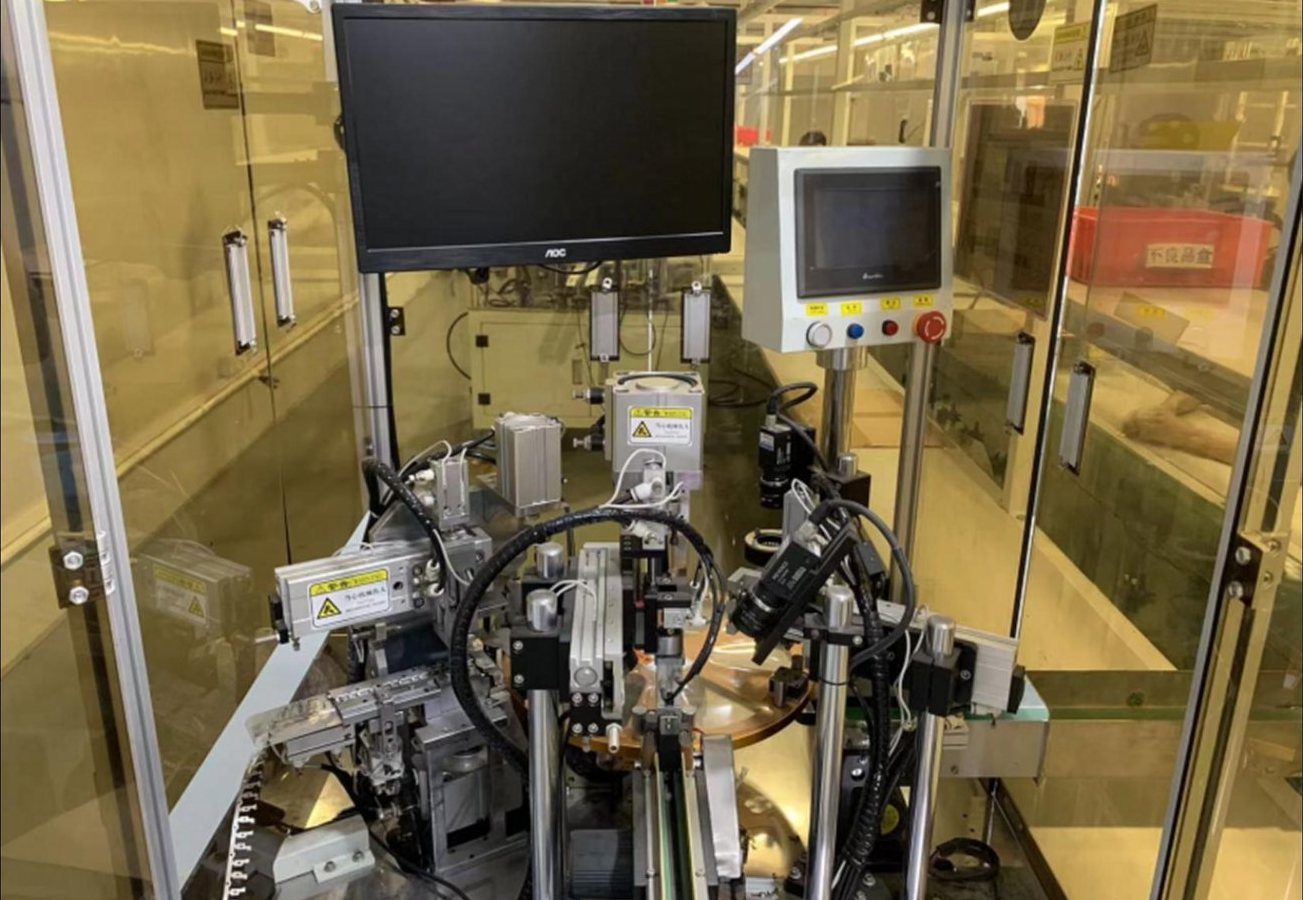
We built the pin inserters on a shared frame with changeable fixtures. That matters commercially: a small order can be automated too, because only the fixture changes, not the machine. The fixtures cover the pin arrangements of the major national plug standards.
3. Spring riveting
Riveting a spring contact looks like a mechanical operation and is really an electrical one. A missed or skewed rivet changes continuity and impedance, so the product either does not conduct or fails later. For orders from 100,000 pieces we rivet automatically, with a CCD station that inspects every part for a missed or crooked rivet, followed by a station that checks continuity and impedance on 100 percent of the output.
The common thread
All three operations were mechanised for the same reason: a human doing a repetitive action with a variable cycle time introduces variation that the molding process cannot compensate for. Automation does not make the part better — it makes the part the same, every time, which is what a production program needs.