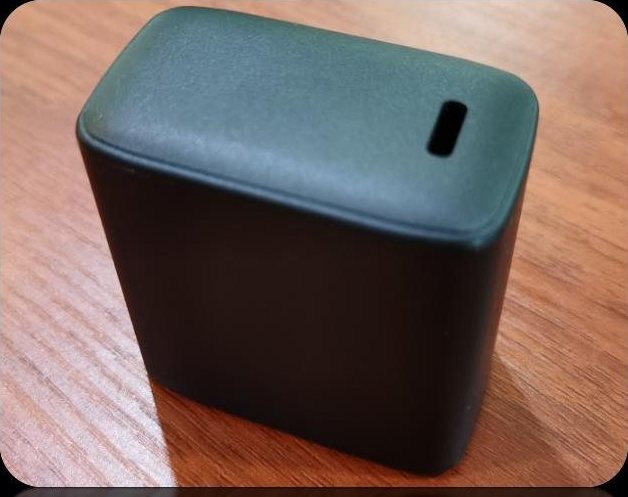
Ask a molder for a housing with a straight side wall and the answer is usually a polite list of conditions: the texture must be finer than VDI 24, the part must be shorter than about 40 mm, and the material should be white, because a black straight wall shows every drag mark. Those limits are real, but they come from the tooling and the process, not from physics.
Why a straight wall is hard
Draft exists to break contact between the part and the cavity as soon as ejection starts. Without it, the entire wall is in contact at the same moment, and the surface is asked to slide along the steel for the full part height. Two things then decide the result: how much the part shrinks away from the cavity before ejection, and how evenly the ejection force is distributed.
Texture makes it worse. A coarse texture is a series of small undercuts, so the wall grips the steel rather than sliding over it. A glossy black surface makes any remaining mark visible from a meter away.
What we changed
- Cooling was split between core and cavity so that the part releases from the cavity side at the right moment rather than being pulled off it.
- Ejection was balanced. A single central ejector pushes a straight wall into the steel; a distributed ejector pattern moves it out parallel to the wall.
- The texture was specified as a number, not a look. VDI 30 was applied and then verified on the tool, not approximated with a polish.
- The process was locked. Holding pressure and cooling time determine how much the part shrinks before ejection, so they cannot drift between batches.
The part we use to prove the method is 163 mm tall with a VDI 30 texture, molded without slides and without drag or stress marks. The important word is “proven”: the geometry is in mass production, not in a sample tray.
What this means for a drawing review
If your design team wants a straight wall, the conversation should happen before the tool is cut. Send the 3D model, the texture specification and the color, and ask for the release method to be defined in the DFM report: which half the part stays on, how it is ejected, and what the process window looks like. A molder who cannot answer those three questions will ask you to add draft later.
Zero draft is not free — it needs a tighter tool and a controlled process — but it is a tooling decision, not a limitation of the material.